
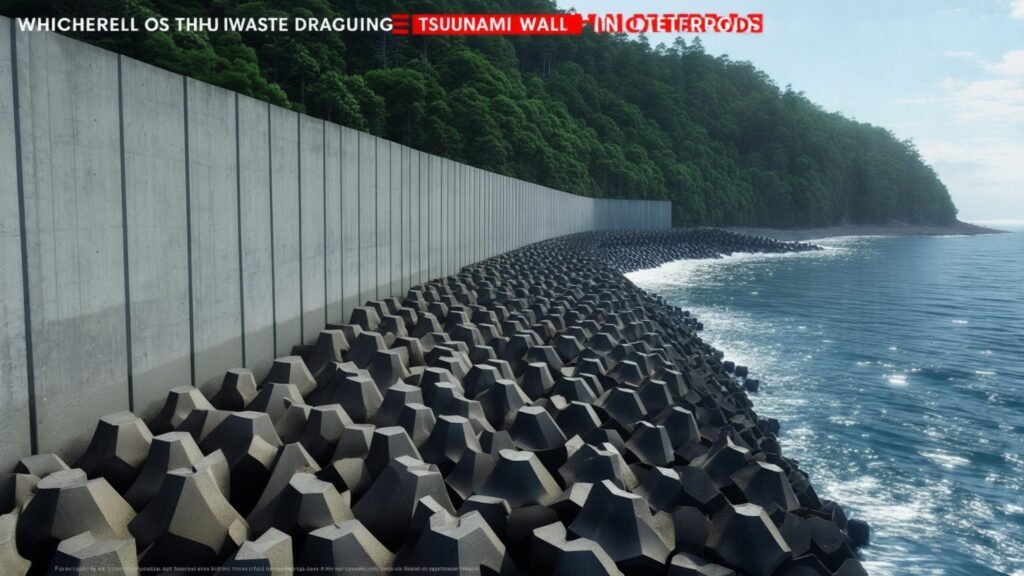
Japan’s Tsunami Wall: Defense After 2011
After the 2011 Tōhoku earthquake and tsunami, Japan launched a major coastal defense rebuild across parts of the northeast shoreline. One of the most visible outcomes is a long network of reinforced seawalls that many people nickname a “Great Tsunami Wall.”
Across affected coastal areas, reporting has described about 395 kilometers of walls built as part of the wider reconstruction push, costing around 1.35 trillion yen in total. These barriers are not identical everywhere, but some prominent sections rise to roughly 12.5 meters.
The idea is not that a wall guarantees safety against every possible wave. The goal is to reduce the force of incoming water, delay flooding, and buy more time for evacuation, especially when warnings are short and coastal terrain is flat. A researcher at Japan’s Port and Airport Research Institute has explained that even if waves exceed a wall, the delay can still matter for survival.
In places such as Rikuzentakata, imagery and reporting have highlighted tall concrete seawalls as part of a broader redesign that also included land-raising and major rebuilding of waterfront zones. Some accounts note that the overall seawall build along the wider Tōhoku coast can exceed 400 km when counting multiple segments and projects.
At the same time, these walls have been controversial in some communities. Residents and fishing families have said the barriers can block ocean views, change the town’s relationship with the sea, and affect local identity, even while acknowledging the safety motivation behind them. Recent academic work has also examined how large reconstruction projects like seawalls can reshape “sense of place” during long recoveries.