
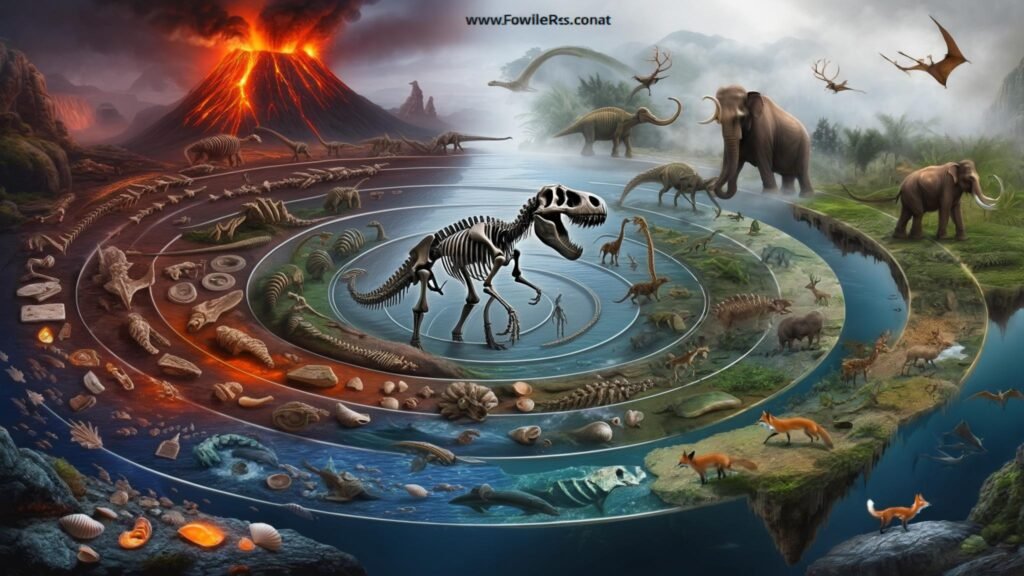
Mass Extinction: Earth’s 5 Major Events Explained
Nearly every species that has ever lived on Earth is extinct. According to decades of paleontological research, more than 99% of all species—from ancient trilobites to towering Carboniferous forests—have vanished over geological time. Extinction isn’t a rare disaster; it’s the default outcome of evolution. Most species survive for around 10 million years before changing environments, competition, or new predators push them beyond their limits. What we see alive today is only a thin snapshot of life’s long and turbulent history, made even thinner by the fact that fossilization itself is extremely rare.
Earth’s past is marked by at least five major mass extinction events, each reshaping life in dramatic ways. The most severe, the Permian–Triassic extinction about 252 million years ago, wiped out nearly 90% of marine species and profoundly altered ecosystems worldwide. While these events were catastrophic, they also opened ecological space for new life forms to evolve. Dinosaurs rose after earlier extinctions; mammals flourished after the dinosaurs disappeared. In this way, extinction and innovation are tightly linked—destruction clears the stage for reinvention.
Today, human-driven climate change and habitat loss are accelerating extinction rates, but it’s important to remember that extinction itself is not new. What is new is the speed. Understanding that nearly all life before us has disappeared doesn’t make our moment meaningless—it makes it precious. Humanity and modern biodiversity exist as part of a long chain of unlikely survivors, shaped by chance, resilience, and constant change. Life on Earth is not static; it’s a story of continual transformation.
📄 Source:
Raup, D. M. (1991). Extinction: Bad Genes or Bad Luck? W. W. Norton & Company.