

How Tina Turner Survived Abuse to Become a Legend
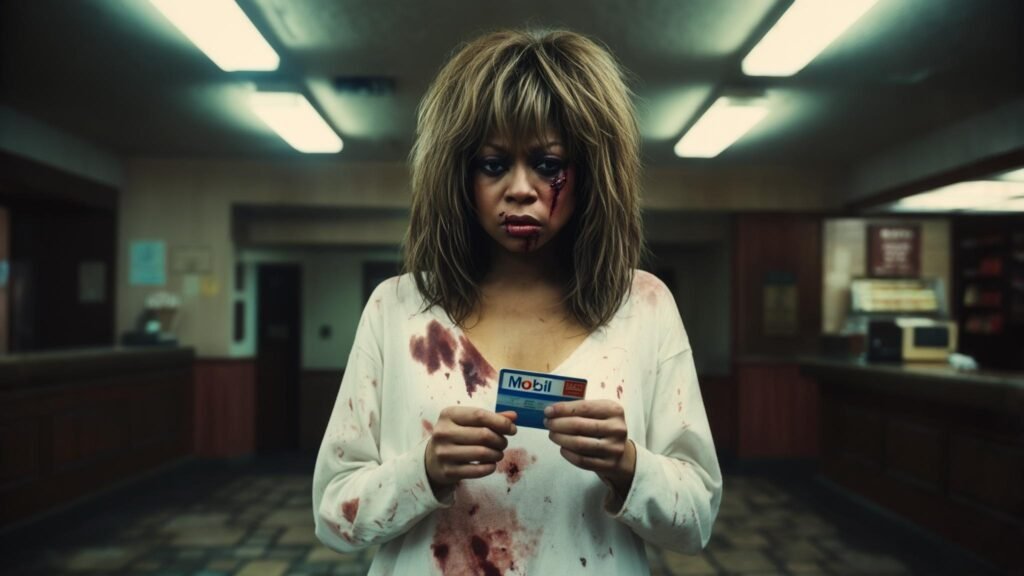
On the night of July 1, 1976, Tina Turner ran across a busy highway in Dallas, Texas, dodging cars in the dark. Blood streaked her face. She had thirty-six cents in her pocket and a Mobil gas card in her hand.
She had just been beaten by her husband, Ike Turner, for the last time.
For years, the violence had lived behind closed doors—hidden beneath stage lights, sequins, and applause. That night, something inside her broke free. Tina ran not toward safety, but toward uncertainty. Toward whatever came next. Toward her own survival.
She found refuge at a Ramada Inn. The manager took one look at her swollen face and said nothing. He gave her a room and locked the door behind her. Tina stayed there for three days, shaking, bruised, and resolute. When she left, it was not to go back to her husband. It was to file for divorce.
What happened next stunned everyone around her.
In the settlement, Tina Turner asked for nothing.
No money. No house. No claim to the studio they had built together. No royalties from the songs that had made them famous. She didn’t fight for assets. She didn’t negotiate percentages.
She asked for only one thing.
Her name.
Her lawyers warned her she was making a terrible mistake. Ike laughed, convinced she would come crawling back. But Tina understood something no one else did. That name—Tina Turner—was the only asset she could turn into a future.
She walked away with two cars, some jewelry, and the rights to her stage name. What followed was not freedom, but fallout. Cancelled tour dates left her buried in debt. An IRS lien loomed. The industry she had helped build closed its doors to her.
For years, she took whatever work she could find. Game shows. Hotel ballrooms. County fairs. She cleaned houses to survive. She used food stamps to feed her children. Promoters didn’t want her. Record labels dismissed her. She was nearly forty—a Black woman in a youth-obsessed industry, branded as a former backup singer whose ex-husband controlled her past.
But Tina did not stop.
She had discovered Nichiren Buddhism, and she chanted daily—sometimes for hours—rebuilding her spirit before rebuilding her career. She found a new manager who believed in her future rather than her past. She accepted small gigs, not for prestige, but for presence.
Then, in 1984, the impossible happened.
At forty-four years old, Tina Turner released the album Private Dancer. It sold more than twenty million copies worldwide. The single What’s Love Got to Do with It became her first—and only—number-one hit in the United States. She won three Grammy Awards. She performed at Live Aid. She starred in Mad Max Beyond Thunderdome.
At an age when most careers fade, hers erupted.
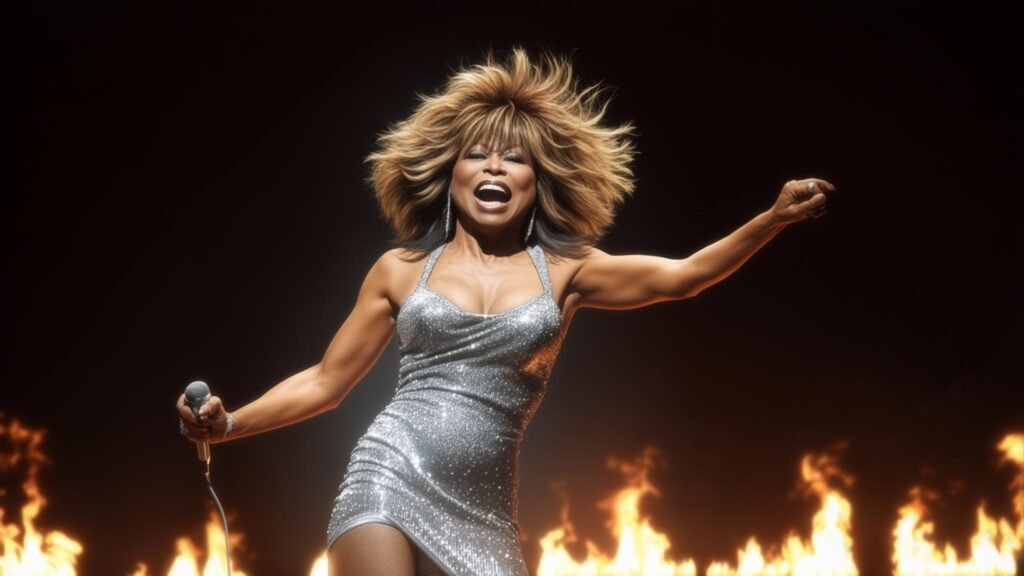
Tina Turner became the Queen of Rock and Roll—not because she had avoided suffering, but because she had survived it. She filled stadiums with audiences who saw in her something more than music. They saw proof. Proof that pain could be transformed. Proof that silence could become power.
In 1986, she met a German music executive named Erwin Bach. He was sixteen years younger than her. They fell in love quietly and stayed together for the rest of her life.

Years later, when Tina’s kidneys began to fail and doctors offered little hope, Erwin did something extraordinary. He donated one of his own kidneys to save her life.
“He said he didn’t want another woman or another life,” Tina wrote later. “Then he shocked me. He said he wanted to give me one of his kidneys.”
Tina Turner died on May 24, 2023, at the age of eighty-three, in her home in Switzerland.
She left behind twelve Grammy Awards. Over one hundred million records sold. And a story that has given courage to generations of survivors.
She proved that a woman can lose everything, walk away with nothing but her name, and still build a legacy that outlives her.
She proved that it is never too late.
And she proved that sometimes, the only thing you need to take with you when you leave is the belief that you deserve better.
Thirty-six cents. A gas card. And an unbreakable will.
That is how legends begin.