
Japan Education System: Character Development First
Japan’s unique education system prioritizes character development and social responsibility in early childhood education.
Experts say this provides a solid foundation for both academic and personal growth.
To this end, in elementary schools, teachers prioritize students’ character and social development, as outlined in the national “Course of Study for Elementary Schools.”
This includes organizing group activities like sports days and festivals and encouraging collaborative classroom dynamics. Students also participate in shaping their class goals and responsibilities, creating a sense of ownership and engagement.
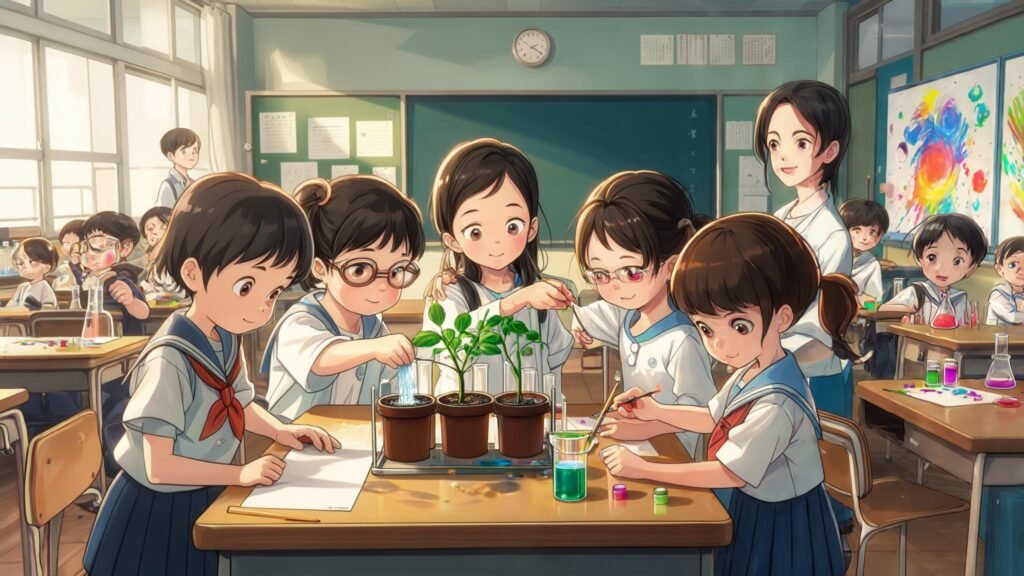
This philosophy extends to the curriculum, where “less is more.” Japanese students focus on fewer topics but explore them deeply, enhancing comprehension and retention. For instance, science lessons often include hands-on experiments and discussions, emphasizing real-world applications and critical thinking.
The curriculum also includes significant time for arts, music, and physical education, nurturing well-rounded individuals. Teachers avoid relying on rewards or punishments, instead fostering intrinsic motivation through group goals and personal growth.
Together, these elements create an environment where academic success is intertwined with ethical development and meaningful relationships, producing students who excel both in knowledge and in character.
Tests don’t become the priority until much later in development and are never the only focal point.