

Story of James Harrison Blood Donor (1936-2025)
In 1951, a fourteen-year-old Australian boy named James Harrison woke up in a hospital bed with his chest tightly bandaged and his life hanging by a thread. Doctors had just performed major chest surgery to save him after a severe lung condition, and the procedure left him dependent on blood transfusions from strangers he would never meet. Over the course of his recovery, James received thirteen units of donated blood. Without them, he would not have survived.
His father, Reg, sat beside his bed and spoke a sentence that James would carry with him for the rest of his life. He told his son that the only reason he was alive was because ordinary people had chosen to donate blood. In that moment, still weak and frightened, James made a quiet promise to himself. When he was old enough, he would donate blood too, and he would keep doing it for as long as he possibly could.
There was one serious obstacle. James was terrified of needles.
When he turned eighteen in 1954, he did not suddenly become brave. His fear did not disappear. But he walked into a blood donation center anyway, sat down, stared at the ceiling, and let the nurse insert the needle. From that day forward, he never once watched the process. Not during his first donation, and not during the last one more than six decades later.
What James did not know at the time was that his blood was unlike almost anyone else’s. After several donations, doctors made a remarkable discovery. His plasma contained a rare and powerful antibody that could be used to prevent hemolytic disease of the fetus and newborn, also known as Rhesus disease. This condition occurs when an Rh-negative mother carries an Rh-positive baby, causing the mother’s immune system to attack the baby’s red blood cells. Before effective treatment existed, the condition led to miscarriages, stillbirths, brain damage, and infant death on a devastating scale.
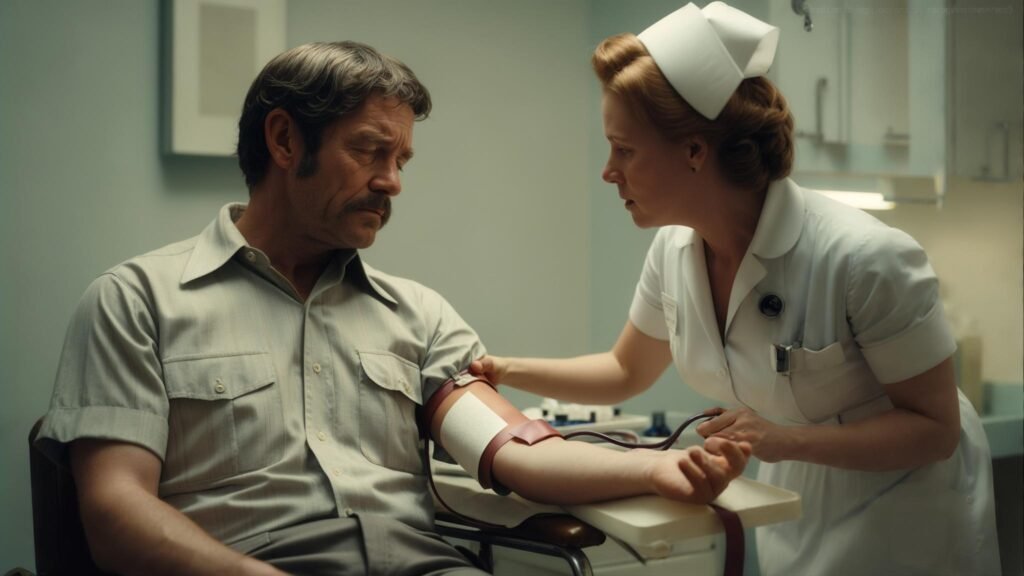
James’s antibodies became the foundation of Anti-D immunoglobulin, a life-saving medication given to pregnant women to prevent the disease. Doctors asked him if he would be willing to switch from whole blood donation to plasma donation, a longer and more demanding process that required visits every few weeks. The commitment would likely last the rest of his life.
James did not hesitate for long. He thought about the fear he felt every time he saw a needle. Then he thought about the babies who would not survive without this treatment. He said yes.
For the next sixty-four years, James Harrison never missed an appointment. He donated plasma 1,173 times. He did it while working as a railway clerk. He did it after retirement. He did it through joy and grief, including the death of his wife Barbara in 2005, which he later described as the darkest period of his life. Each time, he sat calmly, looked away from his arm, chatted with nurses, and waited for it to be over.
In a deeply personal twist, James’s own daughter required Anti-D treatment during pregnancy, and his grandson exists because of the medication developed from donors like him. The impact of his commitment was no longer abstract. It was family.
Since Anti-D treatment was introduced in Australia in the late 1960s, more than three million doses have been administered. Medical experts estimate that James Harrison’s plasma alone helped save the lives of approximately 2.4 million babies. His contributions reshaped maternal medicine in Australia and influenced global treatment standards.
In May 2018, Australian regulations required James to make his final donation at age eighty-one. The room was filled with mothers holding healthy children, living proof of what his quiet consistency had accomplished. He sat in the chair one last time, looked away one last time, and kept his promise to the end.
James Harrison died peacefully in his sleep on February 17, 2025, at the age of eighty-eight.
He never considered himself a hero. He often said that donating blood was easy, that he sat in a safe room, drank coffee afterward, and went home. But millions of people are alive today because he chose to show up again and again, even when he was afraid.
Sometimes heroism does not roar. Sometimes it looks like a man who hates needles, keeping a promise for sixty-four years.