
Fog Harvesting in Peru | Water from the Clouds
High in Peru’s misty mountains, water is being pulled straight from the clouds.
No pipes. No pumps. Just fog and nature working together.
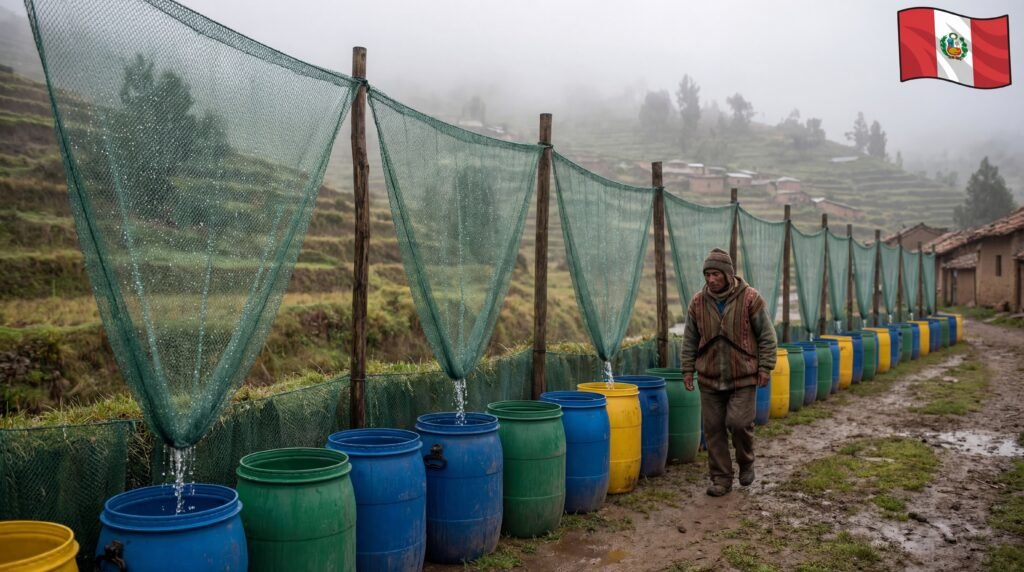
In remote Andean villages where rain is scarce and infrastructure is limited, communities are reviving an ancient technique with modern purpose using fog trap fences made from cactus webbing. These vertical fences are built from the fibrous mesh of native cactus plants, stretched across simple wooden frames and placed in areas where fog regularly drifts through mountain passes.
As thick clouds roll in, tiny droplets of water cling to the cactus fibers. The droplets slowly merge, drip downward, and collect in troughs at the base of the fence. From there, the water is filtered and stored in communal tanks for drinking, cooking, and irrigation.
“Each fog fence can collect up to two hundred liters of clean water every day.”
The design is inspired by how cacti survive in arid environments, using surface texture to capture moisture from the air. The system requires no electricity, no fuel, and no moving parts, making it easy to maintain and ideal for off grid communities.
These fences have a powerful social impact as well. In many villages, women and children previously walked hours each day to collect water. Fog harvesting brings water closer to home, freeing time for education, farming, and work while improving health and stability.
Cactus webbing is biodegradable and locally sourced, allowing the system to blend naturally into its environment. This approach combines indigenous knowledge with biomimicry, showing that innovation does not always mean high tech.
Peru’s fog traps prove that sometimes the smartest solutions come from observing nature and listening to the land.
Source Reporting by water sustainability researchers and NGOs including FogQuest and regional studies on Andean fog harvesting projects