
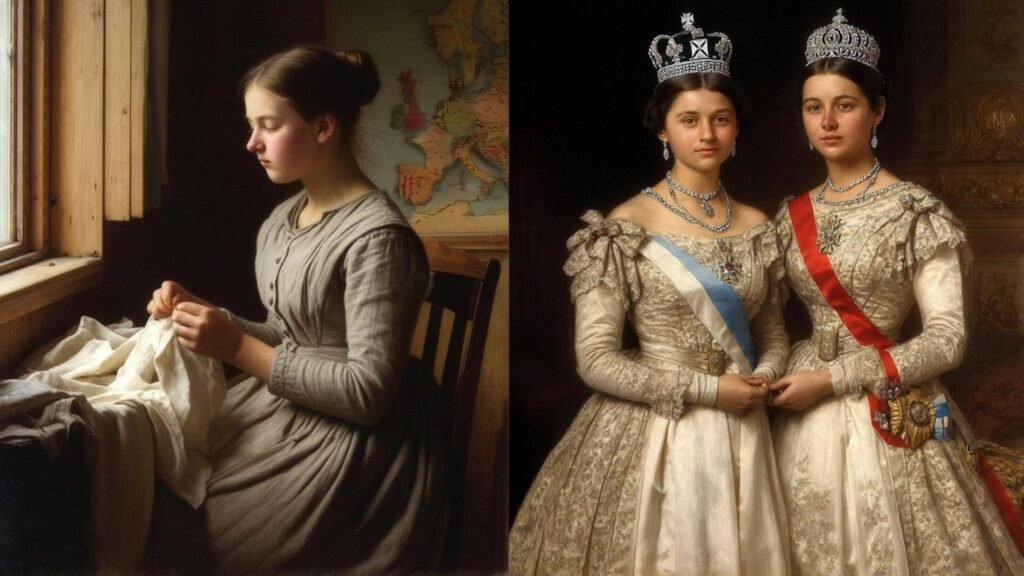
Danish Princesses: From Modesty to Empire | History
Alexandra and Dagmar of Denmark weren’t born into fairy tales—they climbed into them. Though daughters of a king, their early lives in Copenhagen were strikingly modest by royal standards. They sewed their own dresses, walked without grand entourages, and lived in a palace that creaked more than it gleamed. In a Europe where royalty often meant opulence from birth, the Danish princesses stood out for their down-to-earth upbringing and quiet resilience.
But everything changed in the 1860s. In an extraordinary twist of dynastic fate, both sisters would marry into two of the most powerful empires on Earth. Alexandra, graceful and reserved, married the heir to the British throne—future King Edward VII—in 1863. That same year, Dagmar, vibrant and quick-witted, was engaged to the Russian heir, and after a tragic twist involving her first fiancé’s death, she eventually married his brother, Tsar Alexander III. She would become Empress Maria Feodorovna of Russia.
Their lives exploded into wealth and ceremony. From candlelit drawing rooms in London to the gilded halls of the Winter Palace in St. Petersburg, they now moved through worlds of diamond tiaras, imperial protocols, and diplomatic stakes.
But they never quite forgot their roots. Dagmar, in particular, was said to be initially overwhelmed by the sheer abundance of her new life. Yet over time, she grew shrewd with money—accumulating vast personal wealth, particularly in jewels, without ever seeming extravagant. Alexandra, meanwhile, became a fashion icon and national darling in Britain, beloved for both her beauty and her poise.