Marvels of Futuristic Infrastructure Redefining Our World
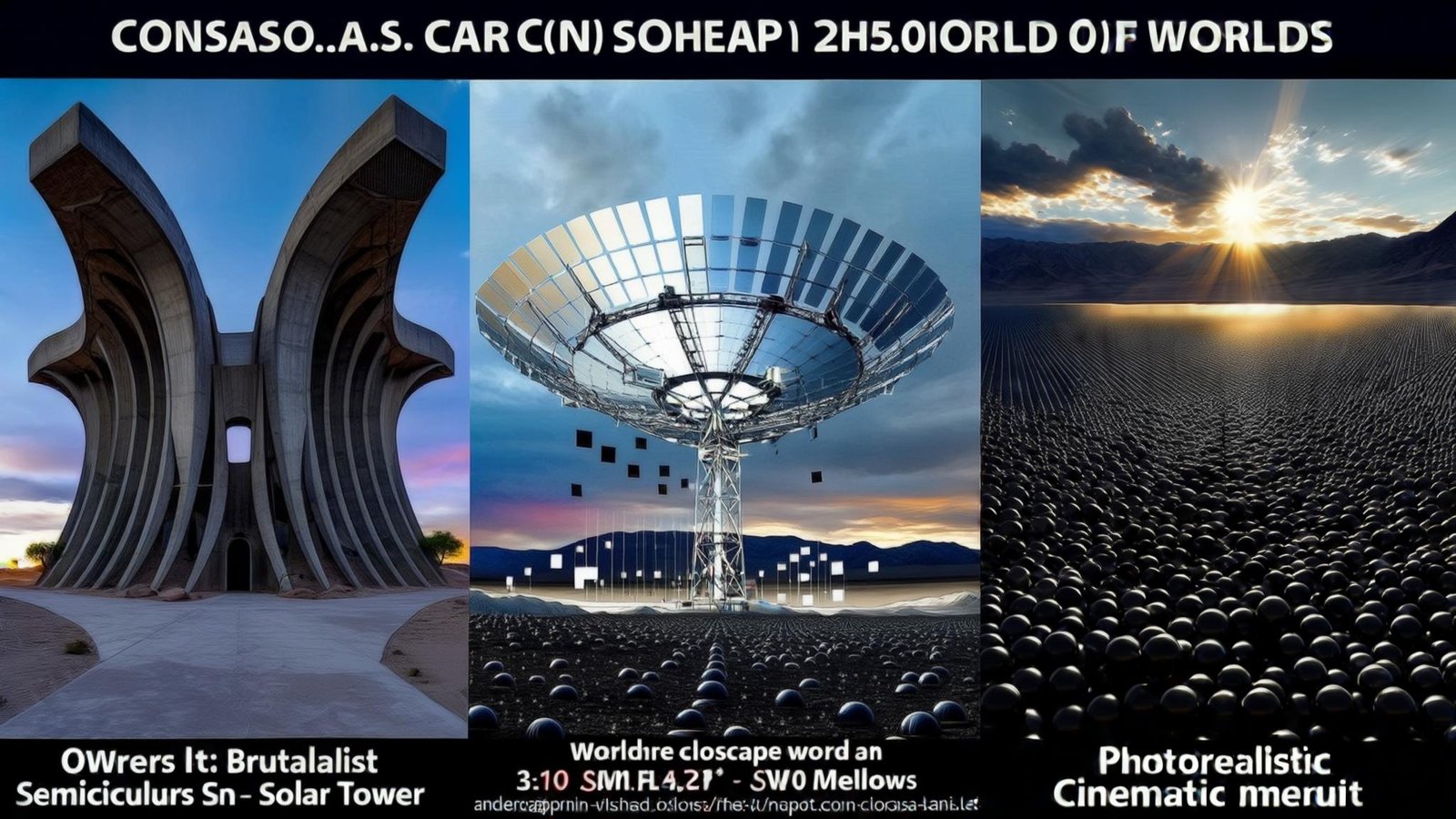
Deep in the heart of Noisy-le-Grand near Paris, Les Espaces d’Abraxas stands as a monumental fusion of Greco-Roman grandeur and gritty postmodernism. Designed by the visionary architect Ricardo Bofill in the early 1980s, this sprawling social housing complex was intended to be a “palace for the people,” challenging the bleak uniformity of traditional public housing. Its massive semicircular “Theatre” and the towering “Palacio” wrap around a central plaza with an imposing, cinematic scale that feels both ancient and futuristic, as if a piece of a lost civilization was rebuilt with cold, industrial concrete.
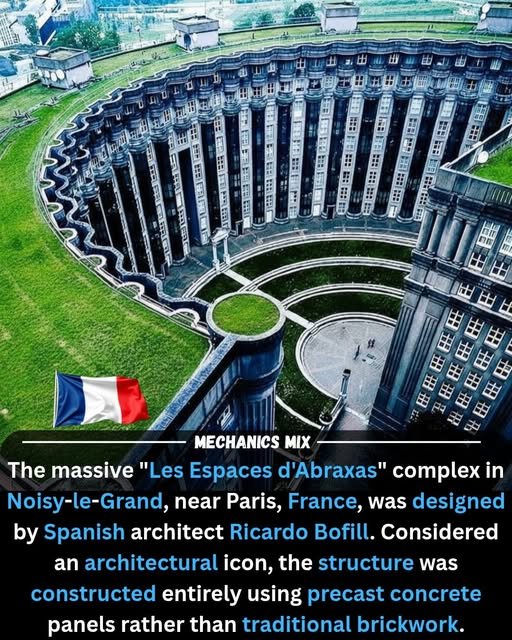
This architectural drama has earned the complex a second life as a favorite backdrop for dystopian cinema, most notably serving as a key location in The Hunger Games: Mockingjay. Walking through its echoing courtyards, one feels a strange tension between its noble aesthetic ambitions and the weathered reality of daily life. It remains a polarizing masterpiece—a haunting, beautiful concrete fortress that serves as a reminder of a time when architects dared to dream of transforming urban living into a permanent stage for theatrical human existence.
Engineering Tomorrow | The Power of Futuristic Infrastructure Today
In the heart of the Moroccan desert, the Noor Ouarzazate complex stands as a sprawling cathedral of mirrors, capturing the sun’s raw power to light up the night. This engineering masterpiece features a central solar tower rising 250 meters into the sky, surrounded by an ocean of thousands of moving mirrors called heliostats. These mirrors act as a collective lens, tracking the sun with surgical precision to focus a blinding beam of light onto a single point at the tower’s summit. The result is a concentrated furnace that generates temperatures exceeding 500°C, transforming the silent desert landscape into a high-tech powerhouse that seems to belong to the future.
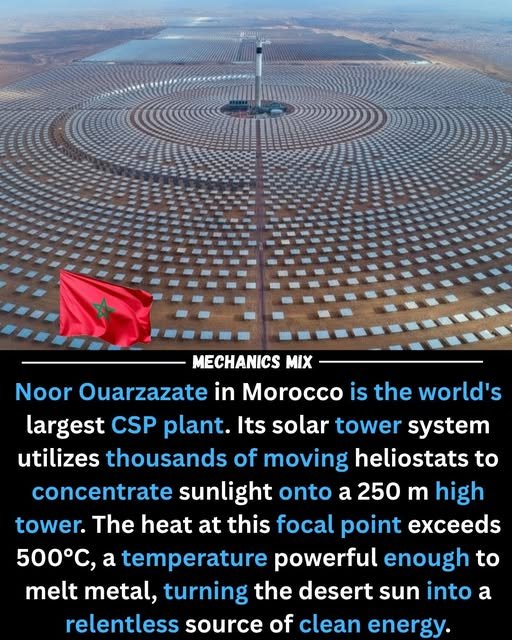
What makes this facility truly revolutionary is its ability to “store” the sun’s heat long after the desert stars appear. By using molten salts to soak up the thermal energy generated during the day, the plant can continue to produce electricity for up to seven hours after sunset. This defies the greatest challenge of solar energy—intermittency—allowing Morocco to harness the scorching daytime heat to power over a million homes through the darkness. It is a breathtaking synergy of physics and industrial design, proving that humanity can indeed tame the most extreme forces of nature to create a sustainable legacy.
Futuristic Infrastructure: The Brilliant Science Behind Shade Ball
Imagine millions of black spheres blanketing a massive lake like a scene from a sci-fi movie; these are “shade balls,” a surprisingly simple yet brilliant solution to water conservation. By floating on the surface of open reservoirs, such as those in Los Angeles, these 96 million plastic spheres create a protective barrier that slashes evaporation by an incredible 90%. They don’t just save water; they act as a physical shield against dust and bird droppings while blocking the sunlight that triggers harmful chemical reactions, ensuring the community’s drinking water remains pure and cool.
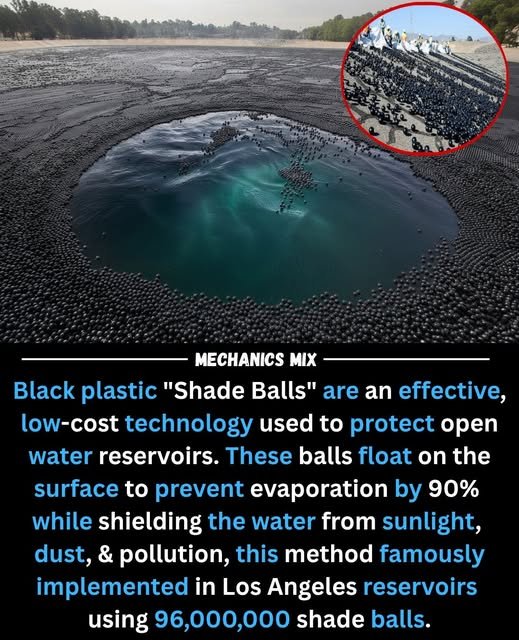
What makes this technology truly fascinating is how it balances high-impact results with low-tech efficiency. Instead of building expensive permanent covers or massive indoor facilities, cities can simply release these durable spheres to adapt to the water’s shifting levels. It is a cost-effective masterclass in environmental engineering, proving that sometimes the best way to solve a complex ecological challenge is with a straightforward, clever idea that literally floats on the surface.