Nature’s Superpowers: The Most Amazing Animal Facts You Need to Know
Imagine a creature that defies the typical boundaries of the forest floor, launching itself into the night sky with breathtaking grace. Despite its name, the flying squirrel doesn’t actually fly like a bird; instead, it uses a specialized furry membrane called a patagium that stretches from its wrists to its ankles, acting like a built-in paraglider. This remarkable adaptation allows it to leap from the highest canopies and glide through the air for distances up to 90 meters—nearly the length of an entire football field—all in a single, silent swoop.
What is truly mind-blowing about these nocturnal acrobats is their incredible mid-air agility. They don’t just drift aimlessly; they use their flat tails as rudders to steer through dense branches with surgical precision. When a predator like an owl gives chase, the flying squirrel can execute a sharp 180° hairpin turn in mid-glide, instantly reversing its direction to vanish into the shadows. Watching one in action is like seeing a tiny, furry superhero navigate the treetops, proving that you don’t need feathers to master the art of the air.
Most Amazing Animal Facts: | Bloodhound Scent Ability
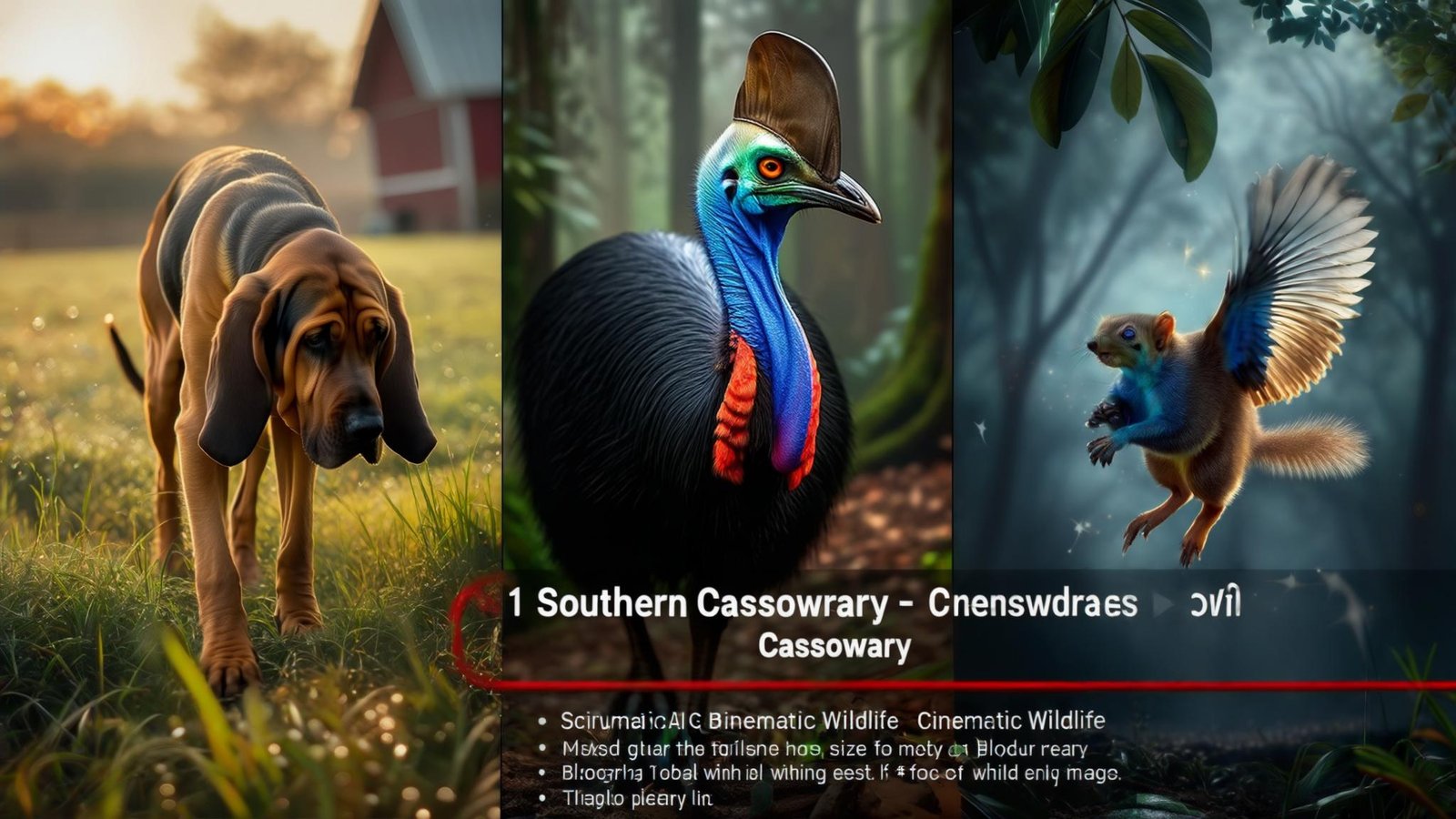
The Bloodhound is nature’s ultimate biological detective, possessing an olfactory system so sophisticated that its testimony is admissible in many courts of law. While a human has about 5 million scent receptors, this elite tracker boasts an astounding 300 million, allowing it to distinguish a single specific scent trail from a chaotic mosaic of environmental odors. Its physical design acts as a specialized tool; those iconic long, drooping ears sweep across the ground as it moves, kicking up microscopic scent particles and funnelling them directly toward its sensitive nose, while the wrinkled skin on its face helps trap those particles for continuous analysis.
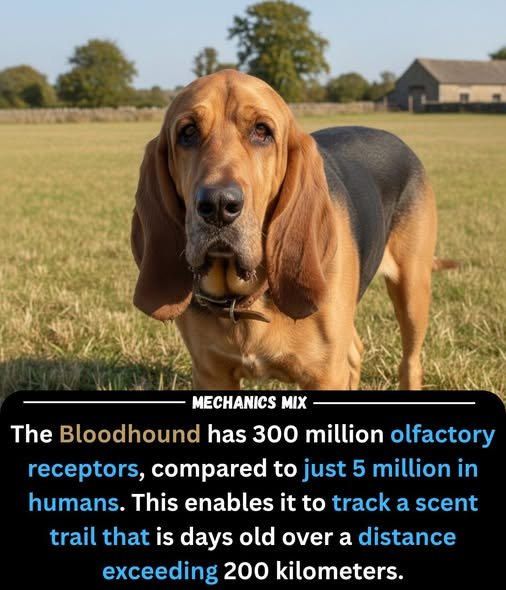
Beyond mere detection, the Bloodhound possesses an extraordinary “olfactory memory” that enables it to follow a trail even days after it was left. Once given a “scent article” to sniff, the dog creates a mental image of that specific odor, allowing it to track a subject across varied terrains, including water and paved urban streets, for over a hundred miles. This relentless drive and accuracy have earned the breed the nickname “a nose with a dog attached,” making it an irreplaceable partner in search-and-rescue missions where human technology often falls short of the canine’s primal instinct.
.
Prehistoric Relics and Modern Detectives | Deadly Birds of Australia
Deep in the ancient rainforests of Australia and New Guinea, there lives a creature that feels like a living relic of the prehistoric past: the Southern Cassowary. Often called the world’s most dangerous bird, this flightless giant stands up to six feet tall, draped in shimmering black feathers and crowned with a mysterious, bony “casque” atop its vibrant blue head. While its striking appearance might command admiration from a distance, its reputation is built on a formidable defense mechanism. Each foot is armed with a razor-sharp, four-inch claw that functions like a literal dagger, capable of delivering a lethal kick that can slice through predators or threats with terrifying speed and precision.
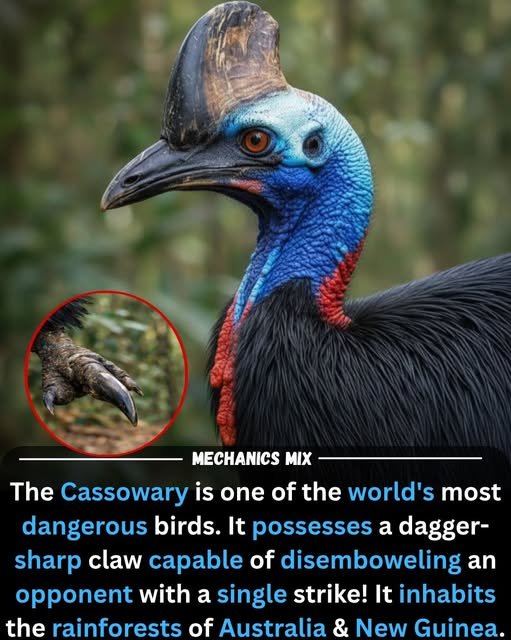
Despite their fierce reputation, cassowaries are the shy, solitary gardeners of the jungle, playing a vital role in the ecosystem by dispersing the seeds of hundreds of tropical plant species. They move like ghosts through the dense undergrowth, relying on their powerful legs to outrun danger or swim across rivers when necessary. However, when cornered or provoked—especially when protecting their young—their temperament shifts from elusive to explosive. Encountering one in the wild is a breathtaking reminder that nature’s beauty often comes with a sharp, prehistoric edge, demanding both our respect and a very safe distance.