

The Six Million Dollar Man: 52 Years of Sci-Fi History
January 18, 1974 – 52 Years Ago Today “The Six Million Dollar Man” Changed Television
Fifty-two years ago today, ABC premiered a show that would redefine what science fiction could be on television.
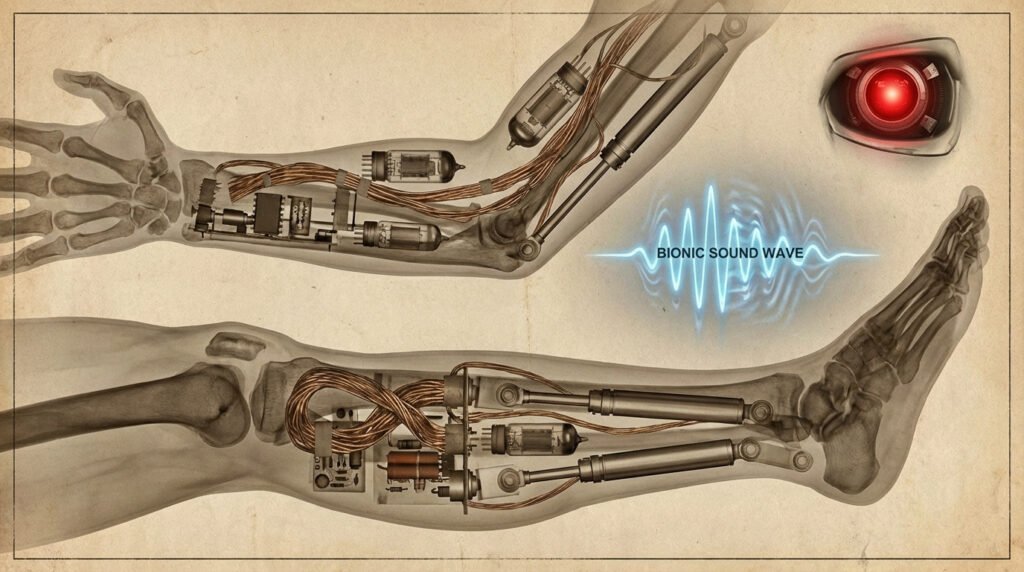
The Six Million Dollar Man introduced audiences to Colonel Steve Austin—an astronaut rebuilt with bionic technology after a catastrophic crash, transformed into a superhuman agent working for a secret government organization.
But the real story isn’t about a fictional cyborg. It’s about how a struggling actor, a visionary writer, and groundbreaking special effects created a cultural phenomenon that influenced everything from RoboCop to the Marvel Cinematic Universe.
THE ACTOR WHO ALMOST QUIT
Lee Majors was 34 years old in 1973, and his career was dying.
He’d had minor success on The Big Valley in the late 1960s, but by the early ’70s, work had dried up. He was considering leaving Hollywood entirely.
Then producer Harve Bennett called with an unusual pitch: Would Lee be interested in playing an astronaut who gets rebuilt with bionic implants after a crash?

The concept came from Martin Caidin’s 1972 novel Cyborg, a surprisingly dark story about technology, disability, and what it means to be human when your body becomes a machine.
Lee read the script for the TV movie. He wasn’t sure.
A bionic man? Would audiences buy that?
He took the role anyway. He needed the work.
On March 7, 1973, ABC aired The Six Million Dollar Man as a 90-minute TV movie. The ratings were massive. ABC immediately ordered two more movies.
By January 1974, they ordered a full series.
Lee Majors went from nearly quitting Hollywood to becoming one of television’s biggest stars—all because he said yes to a role he wasn’t sure would work.
THE INNOVATION THAT CHANGED ACTION TV
The Six Million Dollar Man didn’t just tell science fiction stories. It looked different from anything else on television.

When Steve Austin used his bionic legs to run at superhuman speed, the show used slow-motion photography while playing a distinctive electronic sound effect. The same technique applied to his bionic arm lifting impossible weights or his bionic eye zooming in on distant threats.
This wasn’t just a gimmick. It was a revolutionary storytelling technique that made the fantastic feel real.
Before The Six Million Dollar Man, TV action was shot conventionally. After it, slow-motion became the visual language for superhuman abilities—a technique still used in superhero movies today.
The “na-na-na-na” sound effect (technically a complex electronic tone) became so iconic that decades later, people still make that sound when imitating the show.
THE CULTURAL PHENOMENON
The Six Million Dollar Man became a juggernaut.
At its peak, 30+ million Americans tuned in every week. Kids played “bionic” on playgrounds across the country, running in slow motion and making sound effects.
The show spawned The Bionic Woman in 1976, starring Lindsay Wagner as Jaime Sommers—Steve Austin’s love interest who receives her own bionic enhancements after a skydiving accident. The spin-off became a hit in its own right.
Action figures, lunch boxes, comic books, board games—The Six Million Dollar Man became a merchandising empire.
But more importantly, it changed how television approached science fiction.
Before Steve Austin, TV sci-fi was largely confined to Star Trek reruns and cheesy monster movies. After Steve Austin, networks realized audiences wanted smart, character-driven science fiction that took its concepts seriously.
The Six Million Dollar Man opened the door for The Bionic Woman, The Incredible Hulk, Buck Rogers, Battlestar Galactica, and decades of sci-fi programming that followed.
THE LEGACY
The Six Million Dollar Man ran for five seasons, from 1974 to 1978, producing 100 episodes plus three reunion movies in the 1980s and 1990s.
Lee Majors became a household name and remained one for decades. The show made him a 1970s icon, right alongside his then-wife Farrah Fawcett.
The concept influenced countless films and shows:
RoboCop (1987) – a man rebuilt with technology to fight crime
Universal Soldier (1992) – enhanced soldiers
The entire Marvel Cinematic Universe approach to superhero origin stories
Modern medical dramas exploring prosthetics and human enhancement
The show asked questions that remain relevant: What happens when technology merges with humanity? If your body is rebuilt, are you still yourself? Where’s the line between healing and enhancement?
Fifty-two years later, as we develop advanced prosthetics, neural interfaces, and enhancement technologies, The Six Million Dollar Man feels less like science fiction and more like prophecy.
THE MOMENT THAT STARTED IT ALL
On January 18, 1974, millions of Americans tuned in to ABC and heard these words:
“Steve Austin, astronaut. A man barely alive. Gentlemen, we can rebuild him. We have the technology. We have the capability to make the world’s first bionic man. Steve Austin will be that man. Better than he was before. Better. Stronger. Faster.”
That opening narration became as iconic as the show itself.
Today marks 52 years since that moment.
Fifty-two years since Lee Majors—an actor who almost quit Hollywood—became television’s first cyborg superhero.
Fifty-two years since slow-motion action sequences became the visual language of superhuman powers.
Fifty-two years since a show about a man rebuilt with technology asked questions we’re still answering today.
What’s your favorite Six Million Dollar Man memory? Did you run in slow motion as a kid? Make the bionic sound effects? Share your memories below!